Installing Facades Through a British Winter: Planning for Cold, Wind and Rain
Cold, wind and rain don't stop facade installation — but they do change how it has to be planned. How an experienced installer keeps a winter programme moving without compromising quality or safety.
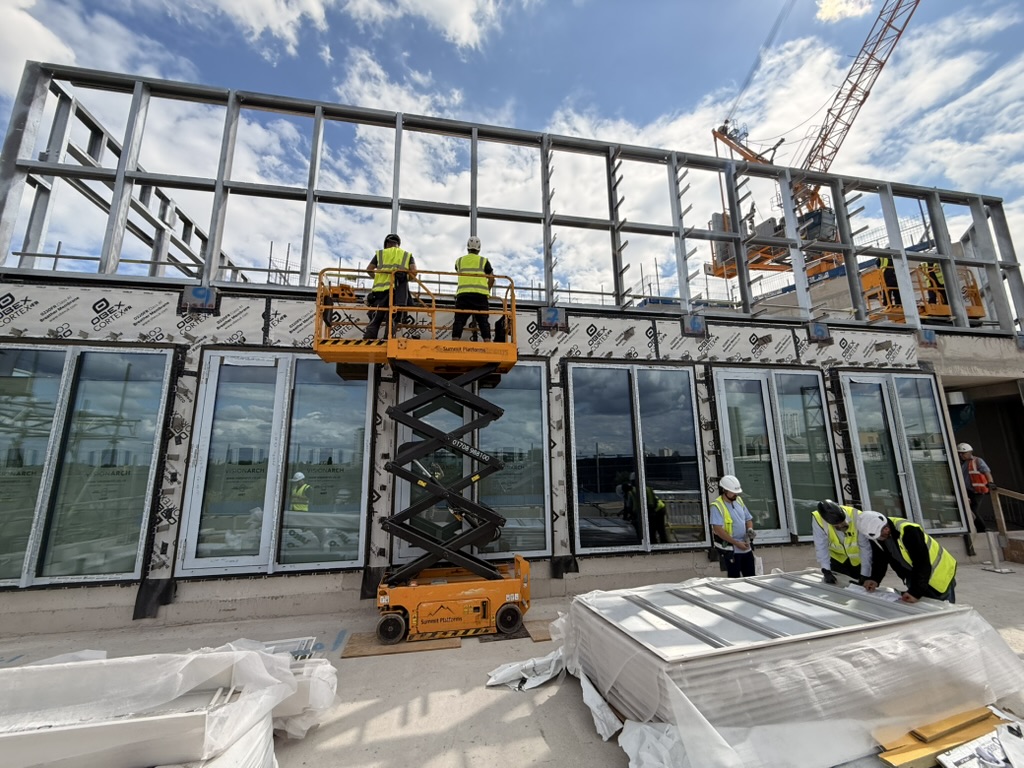
British winters rarely stop a facade programme outright, but they punish any programme that hasn't been planned for them. Shorter daylight, gusting winds, driving rain and near-freezing temperatures all affect how curtain walling, unitised systems, rainscreen cladding, windows and doors can be installed — and when they simply shouldn't be. For an installation-only contractor like Delta Facades, winter working is a planning discipline, not a gamble with the forecast.
Wind: The First Constraint on Every Lift
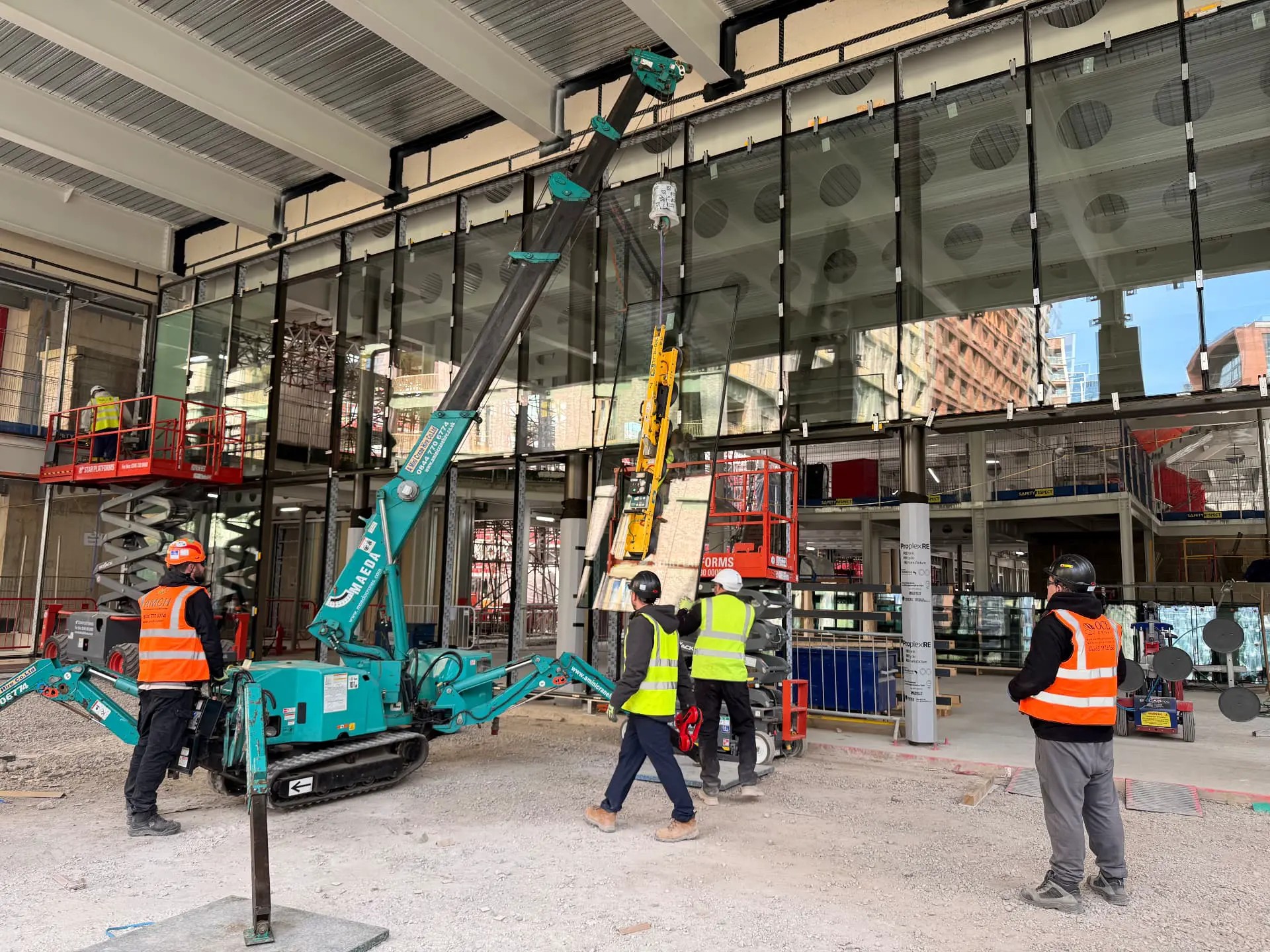
Wind is the single biggest winter variable for facade installation. Large glass units and cladding panels act like sails, and every crane or vacuum lifter lift carries a maximum wind speed set by the lift plan and the equipment manufacturer — not by how the morning feels on site.
A well-run winter programme treats wind limits as hard stops, agreed before the lift starts:
- Monitor, don't guess. Anemometer readings at working height inform go/no-go decisions, taken by the person supervising the lift.
- Sequence around the weather. Panels for exposed elevations are scheduled for settled windows; sheltered faces and internal works absorb the windy days.
- Never creep the limit. A gust forecast near the limit means the lift waits. Recovering a shifted programme is always cheaper than recovering an incident.
Cold: Materials Behave Differently Below 5°C
Low temperatures change how facade materials and consumables perform, and manufacturers' instructions — which installers are required to follow — typically specify minimum application temperatures:
- Sealants and membranes cure more slowly, or not at all, below their stated minimums. Applying them to cold or frosted substrates risks adhesion failure that only shows up months later as a leak.
- Structural silicone and gaskets stiffen in the cold, affecting how units seat and compress.
- Glass and aluminium arrive on site cold; large temperature swings between storage and installation need managing to avoid condensation on interlayers and coatings.
The practical answer is simple: check substrate and ambient temperatures before weather-sealing work, store temperature-sensitive materials correctly, and hold sealing operations when conditions fall outside the manufacturer's limits. A benchmark panel signed off in autumn gives the whole team a reference standard that winter conditions are not allowed to erode.
Rain and Moisture: Keep the Weather Out of the Build-Up
Rainscreen and cladding build-ups are designed to manage water — but only once complete. During installation, open cavities, exposed insulation and unfinished interfaces are vulnerable:
- Protect open work at the end of every shift. Temporary cappings, sealed joints and covered insulation prevent saturated materials being closed in behind finished panels.
- Wet insulation is failed insulation. Material that has taken on water should never be buried in the build-up; it is removed and replaced.
- Drainage paths matter early. Temporary works should never block the drainage and ventilation the finished facade depends on.
Daylight, Welfare and Productivity
By December, usable daylight on a London site can shrink to under eight hours. Winter planning accounts for this honestly rather than pretending a summer programme still fits:
- Task lighting for early-morning setting out and late-afternoon making good.
- Drying rooms, warm welfare and appropriate cold-weather PPE — cold hands make poor sealant joints and slow, unsafe work.
- Realistic daily outputs built into the programme, so quality checks are never the thing squeezed when light runs out.
What Main Contractors Should Expect from Their Facade Installer in Winter
A specialist installer earns their keep in the winter months. The signs of a contractor managing the season properly:
- A weather-aware programme with float around exposed elevations and clear go/no-go criteria for lifting and sealing.
- Documented temperature and wind monitoring feeding daily decisions, recorded rather than remembered.
- Protection of part-complete work treated as a planned activity, not an afterthought.
- Honest reporting — weather days declared early so the wider programme can resequence, instead of slippage surfacing at the end of the month.
Winter doesn't have to mean a stalled facade. With the right planning, monitoring and protection, installation continues safely and to the same standard as any other season — and the buildings that open on time in spring are usually the ones whose facades were planned for winter the previous summer.
Planning a facade package that runs through the winter months? Talk to our team about how we sequence and protect installation through the colder season — get in touch, or explore our curtain walling, unitised, rainscreen cladding and window and door installation services.