How to Choose a UK Facade Installer: A Buyer's Guide for Main Contractors
Ten checks that separate a competent facade installation contractor from a programme risk — manufacturer approvals, fire-stopping competence, benchmark procedure, CWCT testing, access strategy and the questions to ask at tender interview.
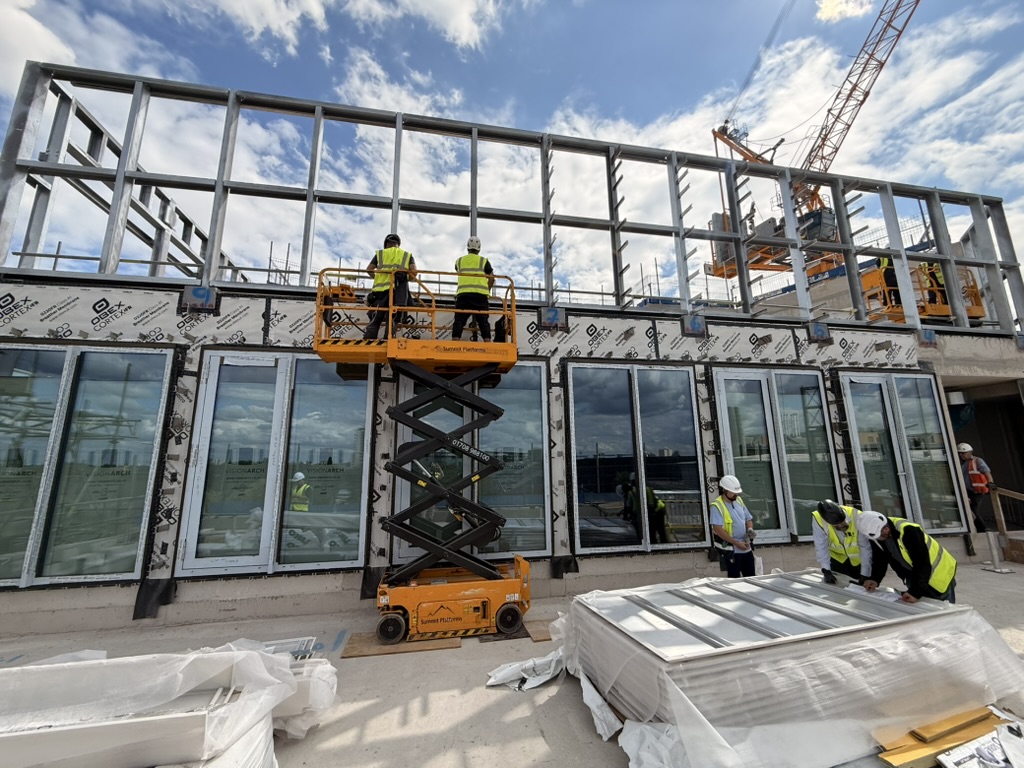
A facade is only as good as the hands that install it. Systems are tested, certified and warranted in laboratory conditions — but on site, performance comes down to whether the bracket is fixed to the tested detail, whether the cavity barrier is continuous, and whether the gasket is dressed rather than stretched.
This guide is written for main contractors, developers, architects and project managers appointing a facade installation contractor in the UK. It sets out what to look for, what to ask, and where packages typically go wrong.
Installer, Manufacturer or Supplier — Who Does What?
Facade packages confuse people because three very different roles get lumped together under "facade contractor":
- The system manufacturer designs, tests and certifies the system — Schüco, Kawneer, Reynaers, Technal, Sapa or Metal Technology. They own the test evidence and the warranty on the product.
- The fabricator cuts, machines and assembles the extrusions into frames and units under the manufacturer's licence.
- The installer sets out, fixes, seals and commissions the facade on site, and is responsible for the interfaces, fire-stopping and weathertightness of the installed envelope.
Delta Facades is an installation-only contractor. We do not manufacture or fabricate. We install — as an approved installer for the leading UK aluminium systems — which means our entire business is judged on the part of the process where most facade defects are actually created.
Knowing which role you are buying matters. If you appoint a fabricator who subcontracts installation to whoever is available that month, you have no continuity of workmanship. If you appoint an installer directly, you are buying site competence.
Ten Checks Before You Appoint
1. Manufacturer approvals on the specific system
Generic aluminium experience is not the same as being trained on the system you have specified. Ask which manufacturer approvals the installer holds, when the training was last refreshed, and whether the operatives who will actually be on your site are the ones who hold them. Systems differ significantly in gasket sequence, drainage principle and tolerance.
2. Accreditations and card-carrying operatives
Look for SSIP-recognised accreditation (CHAS or equivalent), valid CSCS/CPCS cards for every operative and plant user, and GQA qualifications for facade installation — see our guide on what GQA qualifications actually mean. Ask for the current register rather than a sample certificate.
3. Building Safety Act competence
Since the Building Safety Act 2022, competence is a duty, not a marketing claim. Your installer should be able to explain how they demonstrate organisational and individual competence, how they capture Golden Thread evidence as work proceeds, and how they handle change control on a higher-risk building. Our guide on the Building Safety Act and facades covers the duty-holder implications.
4. Benchmark panels and sign-off procedure
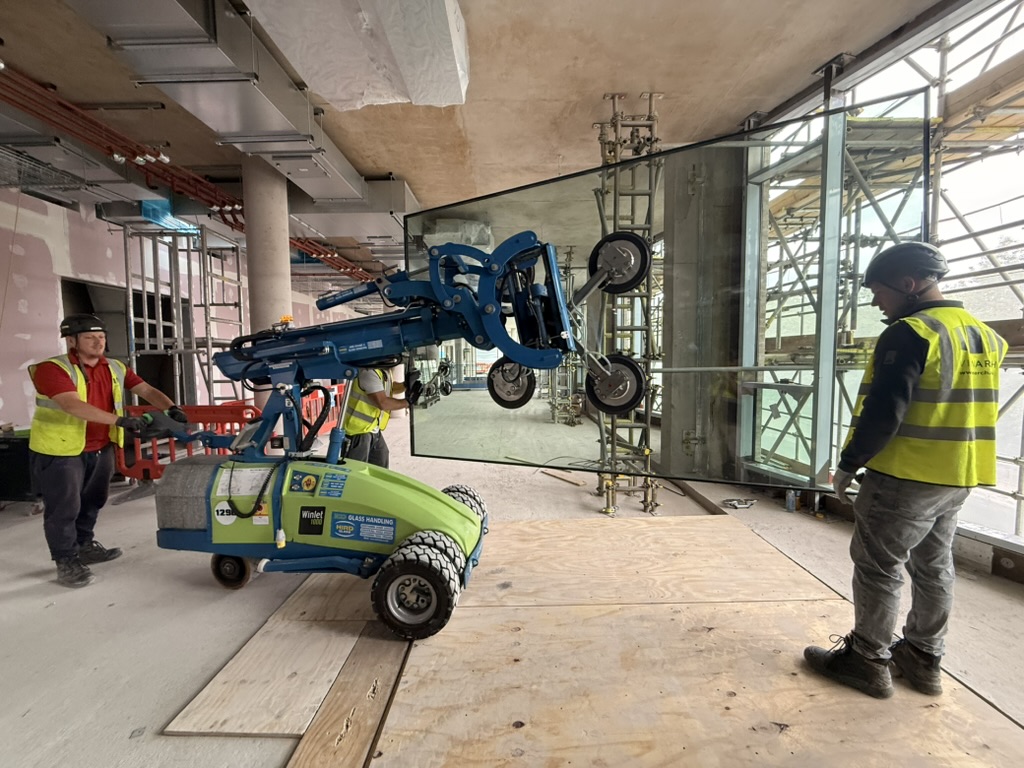
Every competent facade package starts with a benchmark: a first panel or bay installed, inspected and formally signed off before the run is released. Ask who attends, what the hold points are, and what happens if the benchmark fails. An installer who cannot describe this in detail has not run a quality-controlled package.
5. Fire-stopping and cavity barrier responsibility
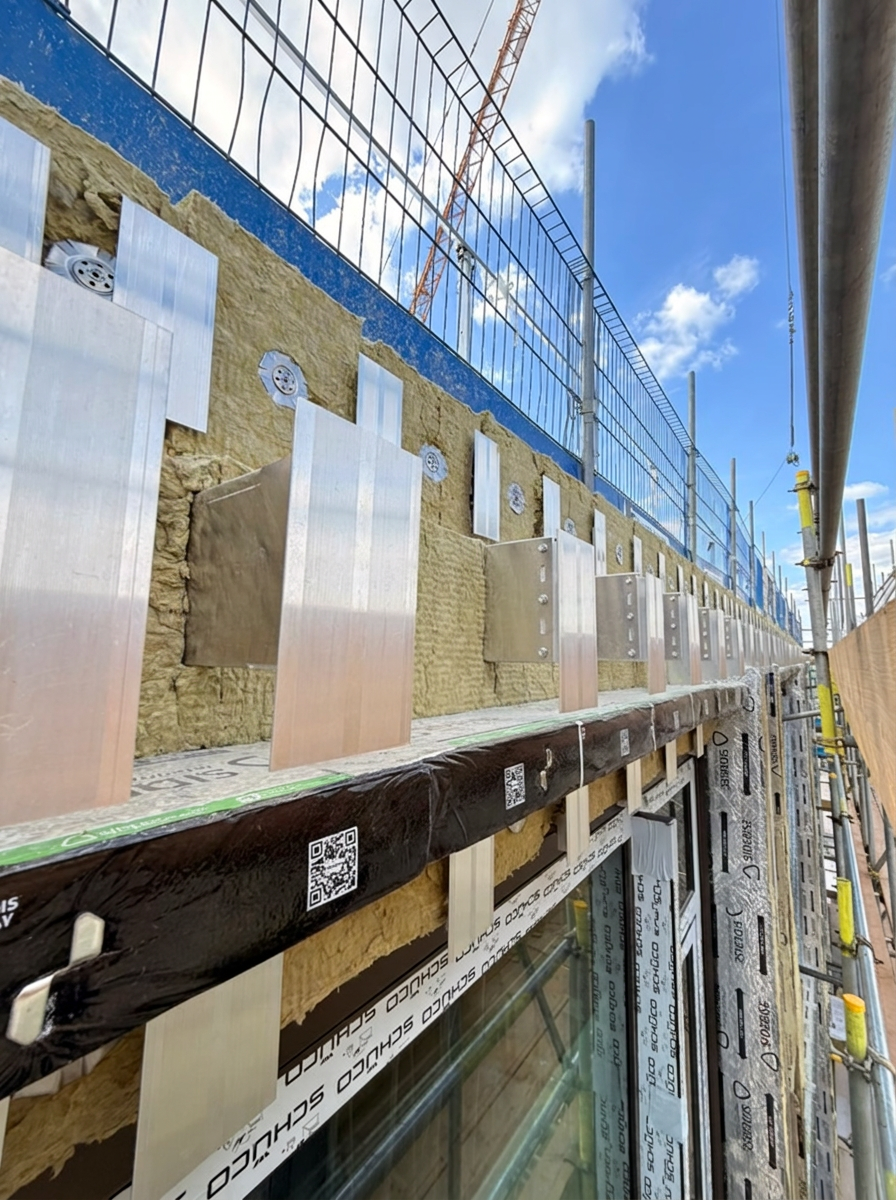
This is the single most common source of remedial cost. Confirm in writing who installs the cavity barriers and horizontal fire-stopping, whether the installer's operatives are trained on the specific barrier product, and how each installation is photographed and recorded before it is closed up. On remediation work, also read our guide to PAS 9980 and FRAEW assessments.
6. CWCT testing and site hose testing
Ask how the installer supports CWCT sequence B testing, site hose testing and air permeability checks — who sets up, who witnesses, and who owns the remedial works if a test fails. Our guide to CWCT testing explains what each test actually proves.
7. Access strategy
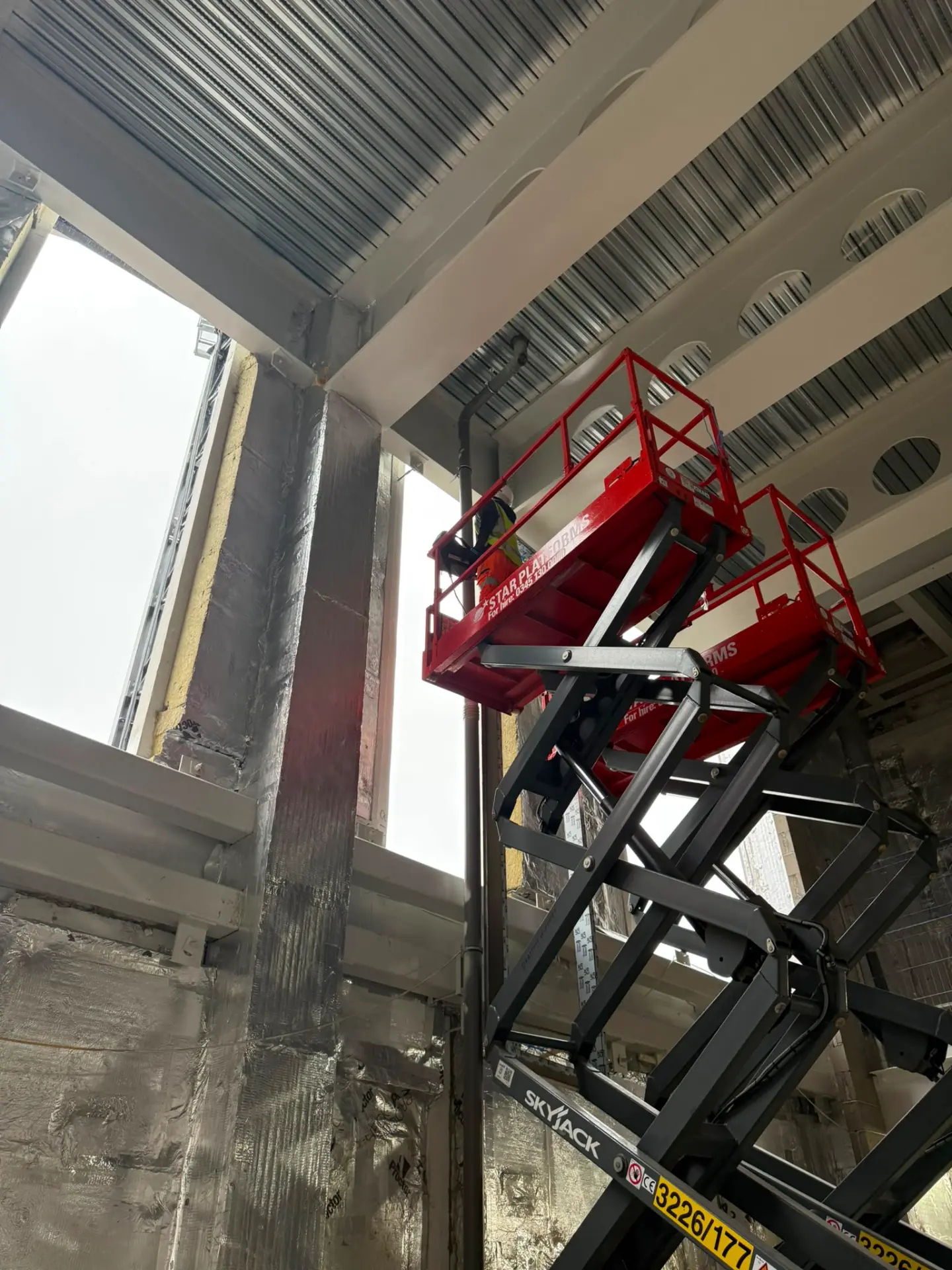
Facade programmes fail on access more often than on glass. Establish early whether the installation will be from mast climbers, MEWPs, scaffold or rope access, who is providing it, how the loading and lifting strategy works, and how it interacts with the crane schedule. An installer who arrives at pre-start without an access position is an installer who will sit idle.
8. Programme resource and recovery capability
Ask how many gangs the contractor can genuinely mobilise, and whether they have ever been brought in to recover a package that was falling behind. Recovery work is a fair test of depth — it requires labour, supervision and the ability to pick up someone else's setting-out. Our project case studies include schemes where we were appointed for exactly that reason.
9. Quality records, ITPs and handover documentation
An Inspection and Test Plan with defined hold points, photographic records tied to grid references, and a structured O&M handover pack should be standard. If the documentation is being assembled in the last fortnight before practical completion, it is not evidence — it is a retrofit.
10. Aftercare and defect response
Warranties matter, but so does response time. Ask what the aftercare arrangement is, who attends a call-out, and how the installer's obligations sit alongside the system manufacturer's product warranty. Our guide to curtain wall maintenance sets out what a sensible aftercare regime looks like.
Red Flags
- Cannot name the system manufacturer's approval they hold, or the approval is out of date.
- Vague about who owns fire-stopping at interfaces.
- No benchmark procedure, or "we'll agree it on site".
- Quality documentation described as something the main contractor handles.
- Every operative is supplied at short notice through an agency with no facade-specific qualification.
- Refuses to put the access and lifting strategy in writing before mobilisation.
Questions to Ask at Tender Interview
- Which system approvals do you hold, and who trained the operatives on this package?
- Who will supervise the works day-to-day, and what else are they running?
- Walk me through your benchmark and hold-point procedure.
- Who installs and records the cavity barriers?
- What is your access strategy, and who is providing the plant?
- How many gangs can you mobilise, and by when?
- Show me the ITP and a sample of quality records from a live project.
- What happens if a hose test fails?
- How do you capture Golden Thread evidence?
- Who attends a defect call-out after handover, and how quickly?
How Delta Facades Approaches It
We install only — aluminium curtain walling, unitised systems, rainscreen cladding, windows, doors and facade remediation — as an approved installer for the leading UK systems. That means benchmark panels before production runs, manufacturer-trained gangs on the specific system, fire-stopping recorded photographically as it is installed, and quality documentation captured live rather than assembled at handover.
If you are appointing a facade package and want to talk it through, get in touch with our team.