The Importance of SSIP Accreditation for Facade Contractors
Learn why SSIP accreditation is essential for demonstrating health and safety competence, winning contracts, and ensuring workplace safety in the construction industry.
In today's construction industry, health and safety is not just a legal requirement — it's a fundamental business imperative. SSIP (Safety Schemes in Procurement) accreditation has become the gold standard for demonstrating that contractors meet rigorous health and safety standards. For facade contractors like Delta Facades, maintaining SSIP accreditation is essential for protecting our workforce, satisfying client requirements, and winning major contracts.
What is SSIP?
Safety Schemes in Procurement (SSIP) is a mutual recognition umbrella body that brings together major health and safety assessment schemes across the UK construction industry. Established to reduce duplication and simplify the pre-qualification process, SSIP enables contractors to achieve one assessment that is recognised across multiple client organisations and schemes.
SSIP member schemes include well-known certification bodies such as CHAS, SafeContractor, Constructionline, and many others. When a contractor achieves accreditation through any SSIP member scheme, it demonstrates that they have met a common, rigorous standard for health and safety competence.
1. Demonstrating Health and Safety Competence
SSIP accreditation provides independent verification that a contractor has the necessary health and safety management systems, policies, and procedures in place to work safely.
- Written health and safety policy: A clear, comprehensive policy that reflects the organisation's commitment to safety
- Risk assessment procedures: Systematic approaches to identifying and controlling workplace hazards
- Safe systems of work: Documented procedures for high-risk activities including working at height
- Training and competence: Evidence that workers receive appropriate training and hold necessary certifications
- Accident and incident reporting: Robust systems for recording, investigating, and learning from incidents
- Consultation arrangements: Mechanisms for involving workers in health and safety decisions
2. Meeting Client and Principal Contractor Requirements
In the construction industry, clients and principal contractors are legally required to verify the competence of their supply chain. SSIP accreditation provides a straightforward way to satisfy these requirements.
- Streamlined tender processes: Many clients accept SSIP certification as proof of health and safety competence
- Access to major contracts: Public sector and many large private clients require SSIP accreditation as a minimum standard
- Reduced administrative burden: One assessment satisfies multiple client requirements
- Competitive advantage: Accreditation differentiates professional contractors from less rigorous competitors
3. Protecting Your Workforce
Beyond business benefits, SSIP accreditation drives genuine improvements in workplace safety that protect the people who matter most — your employees. At Delta Facades, we're proud to report zero lost time incidents in 2025 — a testament to our commitment to the safety standards that SSIP accreditation represents.
4. Legal and Regulatory Compliance
SSIP accreditation helps contractors demonstrate compliance with UK health and safety legislation, including the Health and Safety at Work Act 1974 and the Construction (Design and Management) Regulations 2015.
5. The SSIP Mutual Recognition Advantage
One of SSIP's greatest benefits is mutual recognition between member schemes, dramatically reducing duplication and administrative burden. When you achieve accreditation through one SSIP member scheme, your certification is recognised by all other SSIP member schemes.
6. Facade Installation: A High-Risk Environment
Facade installation presents particular safety challenges that make rigorous health and safety management essential:
- Working at height: Falls from height remain the leading cause of construction fatalities
- Manual handling: Glass panels and aluminium sections can be heavy and awkward to handle
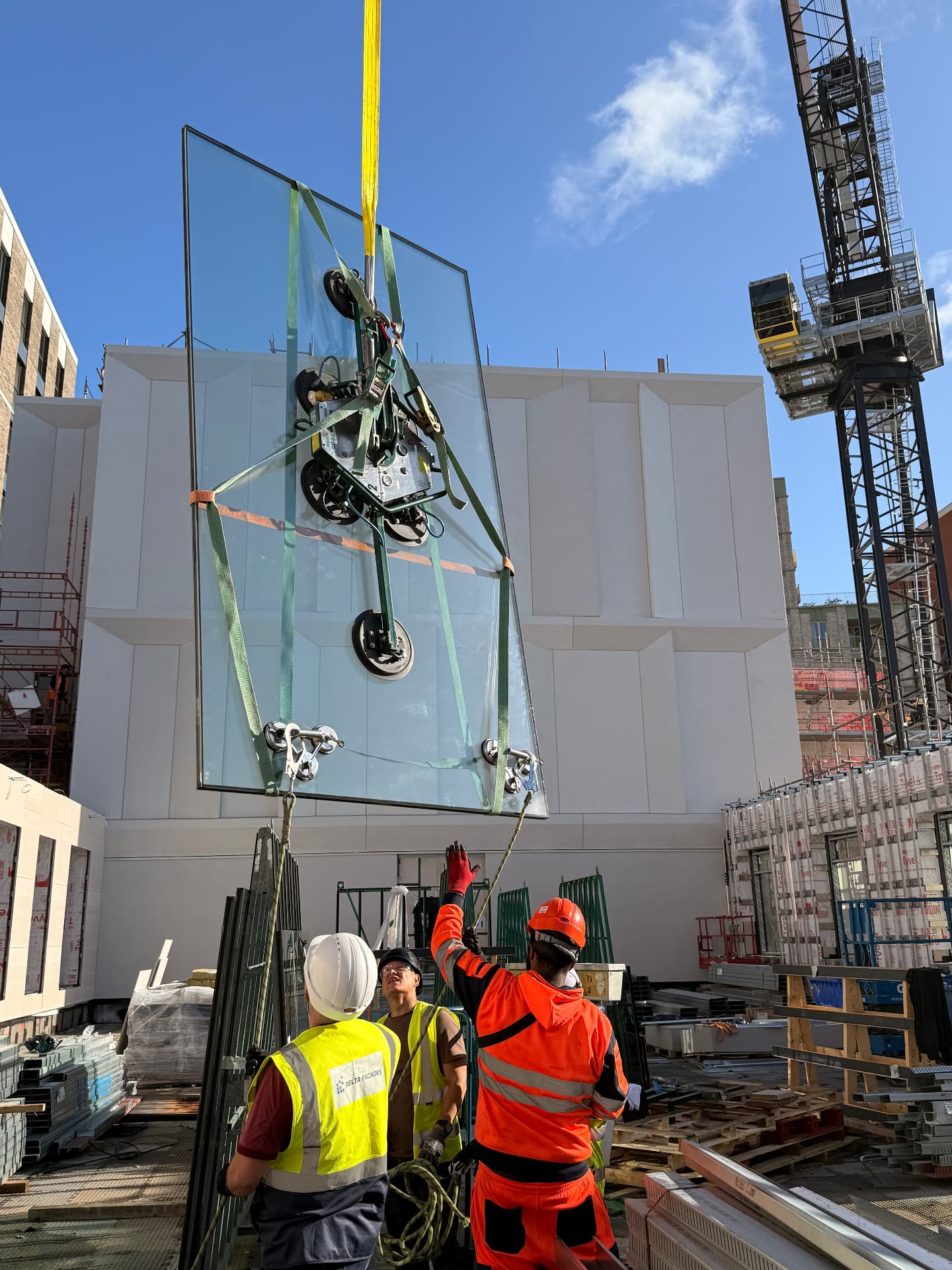
- Lifting operations: Crane work for unitised panels requires careful planning and coordination
- Weather exposure: Work continues in varying weather conditions that affect safety
- Interface with other trades: Coordination required with structural, mechanical, and electrical contractors
- Glass handling: Specific risks associated with handling and installing glazing
7. Beyond Minimum Standards
At Delta Facades, we complement our SSIP accreditation with daily safety briefings, enhanced CSCS-carded training, detailed RAMS for every project phase, high-quality PPE, thorough incident investigation, and regular worker consultation.
Conclusion
SSIP accreditation is far more than a badge on a website. It represents a genuine commitment to health and safety excellence that protects workers, satisfies clients, and demonstrates professional competence. For facade contractors operating in a high-risk environment, SSIP accreditation is essential.